
Tel Aviv's History Is Also a Place to Live
In Tel Aviv, history is not always behind a museum door. It may be in a curved balcony above the pavement, a stairwell railing or an entrance you pass on the way to coffee. Preservation buildings connect the way the city was made with the lives continuing inside it.
Their appeal is understandable: character, detail and contact with another period. But preservation is more than a beautiful appearance. The White City is not a collective name for every older building in Tel Aviv. Understanding the heritage helps you appreciate both its interest and the responsibilities of living with it.
The White City is more than white facades
In 2003, Tel Aviv's White City was inscribed on UNESCO's World Heritage List. The recognition concerns an ensemble of town planning and Modern Movement architecture, not a single house or simply a collection of pale buildings.
Patrick Geddes's planning ideas and buildings mainly dating from the 1930s through the 1950s combined to create a distinctive urban fabric. Architects trained in Europe adapted modern ideas to local climate and culture. Light, air and the connection between a building and the street were part of that architectural language.
Heritage also lies between the homes: gardens, spaces and the scale of streets. A restored facade alone cannot explain the whole setting.
Bauhaus and International Style are not identical labels
"Bauhaus" has become a familiar shorthand for this architecture. It is not an exact description of every White City building. Several Modern Movement influences were involved, and International Style is also commonly used to describe the architectural language in Israel.
Not every architect studied at the Bauhaus school, and not every protected historic building belongs to that style. Balconies, flat roofs, columns and horizontal windows may be recognizable features, while eclectic buildings, public buildings and homes from other periods contribute other parts of Tel Aviv's preservation story.
Liebling House: architecture made for living
Liebling House at 29 Idelson Street offers a useful example. Commissioned in 1936 by Tony and Max Liebling, it was designed by architect Dov Karmi and engineer Tzvi Barak. Today it houses the White City Center, working with architecture, conservation and urban life.
The center describes much of the original division into apartments as retained after the change to public use. That helps show why heritage does not end at an exterior. Materials, rooms and ways of living matter too. The building was made for people, not only for photographs.
Bialik House and a wider heritage
Around Bialik Square, different layers of the city meet. Haim Nahman Bialik's house, with its more decorated architectural language, differs from the restraint of nearby Liebling House. The comparison makes room for several kinds of beauty and more than one historical period.
Bialik House is also a cultural place where a building and a human story are closely connected. A walk around it can bring architecture, literature and street life together. A home need not be called an icon for a detail at its entrance to tell you something about Tel Aviv.
What does preservation mean in a home search?
White City heritage recognition does not establish the planning status of an individual property. Check whether the building falls under a relevant preservation plan or list, which provisions apply and what alterations are permitted. The municipality distinguishes ordinary preservation from preservation with stricter restrictions.
Do not assume a lift, extension, renovation or window change will be approved because it was allowed elsewhere. Buyers should have the building file, permits and rights reviewed by professionals familiar with preservation. Any rights or incentives require their own checks; they are not automatic promises.
Character needs good maintenance
Inspect damp, waterproofing, systems, access and available protected space alongside the details you admire. Understand shared maintenance, expected work and who bears the costs. A restored exterior does not prove that the whole building has been treated to the same standard.
At ProperTLV, we love homes that tell a story. We also believe the story should meet a comfortable routine. A considered choice leaves room for beauty and history while providing clear answers about the home you will live in. That keeps the White City part of real life, rather than only a beautiful view of the past.
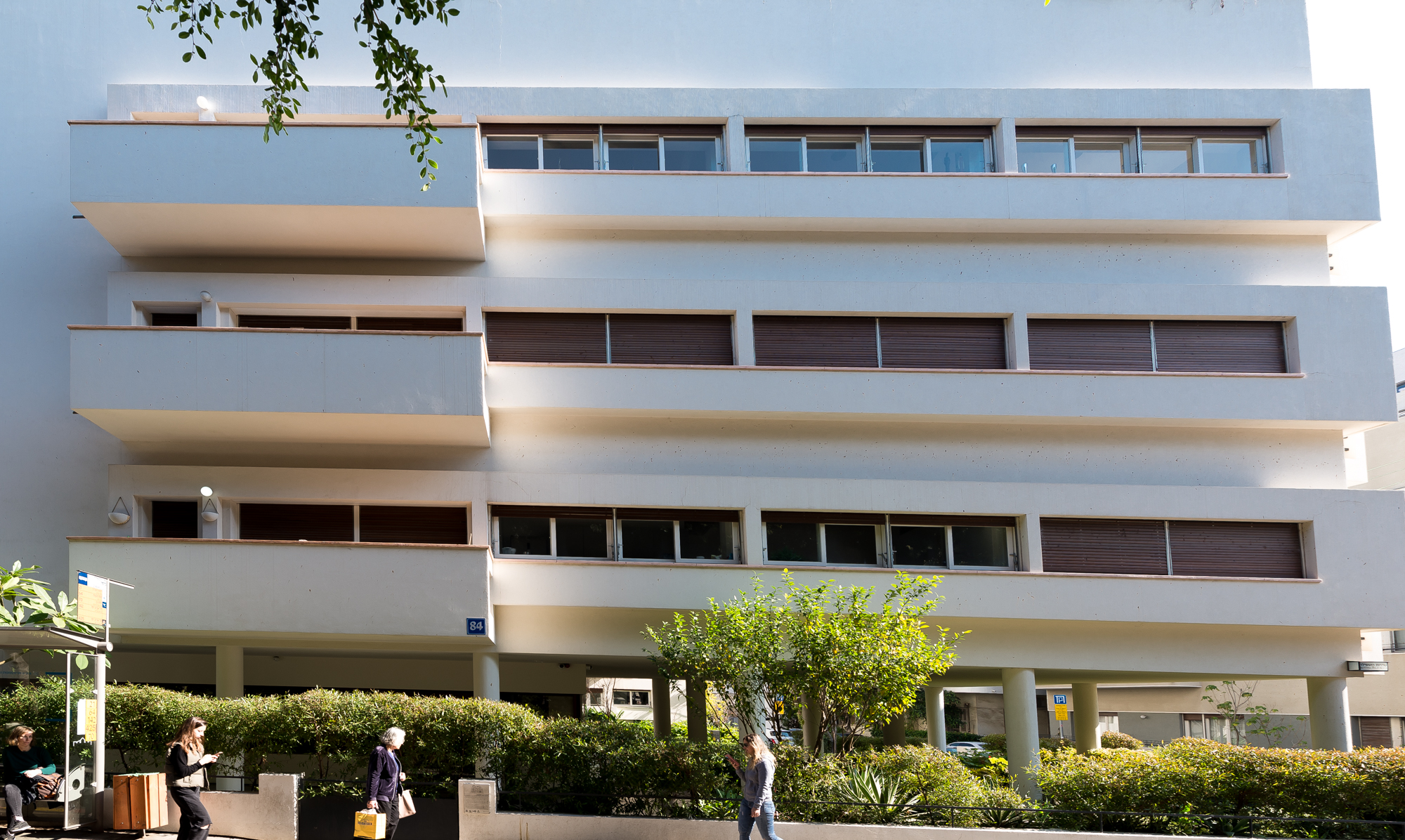
Photo: Engel House, 84 Rothschild Boulevard, 2023.
Photo credit: Roni Pomerantz Pikiwiki Israel / Wikimedia Commons / CC BY 2.5. Source: https://commons.wikimedia.org/wiki/File:93805_tel_aviv_the_white_city_-_84_engel_rothschild_hous_PikiWiki_Israel.jpg. License: CC BY 2.5 (https://creativecommons.org/licenses/by/2.5).